Frustration is inevitable, especially during a challenging or ambitious project. You will get angry, annoyed, stuck, or impatient at some point. And while a lot of advice tells us to simply push through or ignore it, frustration can actually tell us something useful.
This Weekend Workshop draws from psychology, affective science, and artistic improvisation to explore frustration as information rather than simply a setback. You’ll learn to recognise what happens before and during moments of frustration, understand why people respond differently under pressure, and experiment with ways of moving from automatic reactions towards more deliberate and creative responses.
The goal isn’t to eliminate frustration, or to “toughen up.” It’s to get better at noticing what is happening while it is happening – in your thoughts, your body, and the people around you – and to build a more flexible way of responding when things don’t go according to plan.
What to Expect
This is a highly experiential workshop. Rather than spending the weekend mainly listening to lectures, you’ll take part in practical exercises drawn from psychology and improvisation, some of which deliberately introduce a little uncertainty, friction, or surprise.
You’ll work individually and with others, reflect on your own responses, and compare what you notice with the experiences of the group. No improvisation, performance, or psychology experience is required, and the point is not to be “good” at the exercises. They are there to make reactions visible so that you can examine them.
Across the weekend, you’ll move from noticing your patterns to experimenting with different ways of responding. By the end, you’ll have a set of practical techniques for pausing, reframing, adapting, and working more constructively with frustration – both on your own and with other people.
What You’ll learn:
- How to notice the early signs of frustration in yourself and others, and treat them as useful information.
- How to pause and reset when things get frustrating, so you can think more clearly before responding.
- How to work with friction in groups and prevent tension from automatically becoming conflict.
- How to use mistakes, blocks, and unexpected turns as starting points for exploration and new ideas.
- How to stay more flexible in uncertain situations by shifting from reactive to exploratory ways of thinking.
- How to stay agile in uncertain situations by shifting from reactive to exploratory ways of thinking.
About the instructors
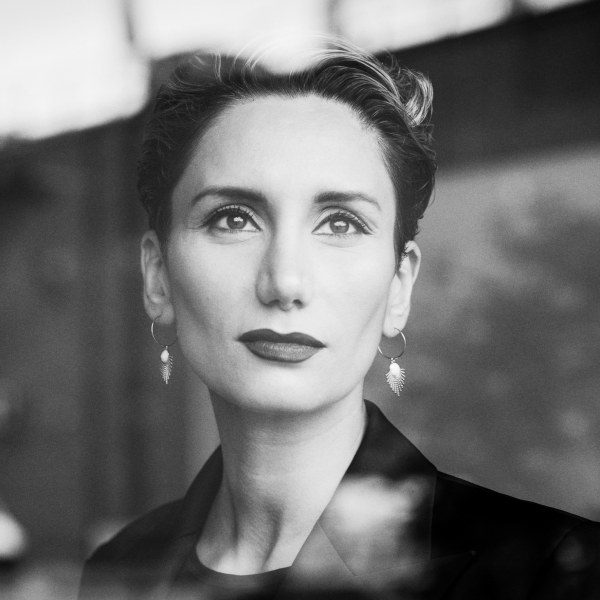
Dr. Hannaneh Yazdi is a researcher and educator with a background spanning psychology, affective science, and industry. She holds a PhD from the Department of Clinical Neuroscience at Karolinska Institutet, where her work explored frustration mechanisms, how people differ in their responses, and how individual differences affect our frustration experience. Hannaneh’s teaching bridges scientific insight with practical tools for navigating complexity and uncertainty, with the goal of helping individuals and teams understand and work more inclusively and productively with their emotional responses.
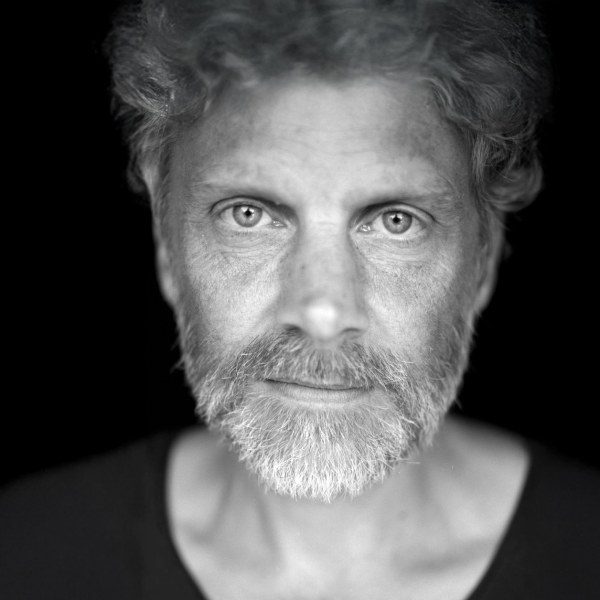
Klas Nevrin is a lecturer in improvisation at the Royal College of Music, as well as a professional musician, composer, and artistic researcher. His work focuses on collective creation, embodied awareness, and improvisation as a way of navigating uncertainty. Through projects such as AMIS (Artistic Co-creation Methods for Innovation and Sustainability), Klas explores how artistic methods can help groups listen, adapt, and generate new possibilities together.
This workshop connects to our course Entrepreneurial Mindset and pairs well with Artistic Entrepreneurship.
For a research perspective on emotions, motivation and setbacks, read Do Entrepreneurs Burn Out Too?
ELIGIBILITY & SELECTION
All students and alumni of SSES member universities are eligible to apply to this weekend workshop. We get many applications and unfortunately cannot accept everyone. The selection process is outlined below.
For this specific workshop, you as an attendee will be requested to present yourself and what motivates you to learn about frugal innovation by uploading a short personal video. We also ask that you share in what area you would like to identify opportunities for frugal innovation and why.
SELECTION PROCESS
- Application is reviewed
- Selection is made and a confirmation email is sent out
- Participants must confirm their seat in order to secure the spot
- If spots are not confirmed in time, the waitlist will be reviewed and new participants selected