On the north-east coast of Japan lies a community that has been faced with the difficult challenge of rebuilding itself after the Great East Japan Earthquake, tsunami, and Fukushima Daiichi nuclear accident in 2011. Odaka was placed under mandatory evacuation for more than five years, and you can see the effects of it to this day in its population, industries, and social structure.
But even in a place so deeply affected by disaster, this rural town is also shaped by resilience, renewal, and experimentation. Today, residents, entrepreneurs, researchers, public institutions, and community organisations are working to revitalise the town while preserving its identity.
That work comes with its own set of specific challenges. What should happen to vacant or disrupted land? How can new infrastructure, technology, policy, and business support the local economy – and who in the community actually benefits from development? And in a place where energy carries so much history, risk, and meaning, how can new sustainable energy systems be built in ways that serve the people who live there?
This Bootcamp invites you to learn from that ongoing work, and to contribute your own perspective to it.
Inside the Bootcamp
You will spend time in Odaka learning directly from the people shaping its future. Through site visits, conversations, interviews, workshops, and field observations, you will explore how renewable energy, technology, policy, business, and community interests intersect. You will examine what happens when national ambitions meet local realities, how one initiative can create unexpected effects, and what it takes for new ideas to create lasting local value.
Working from grassroots problem-framing, you will be asked to understand local needs before proposing possible solutions. Through stakeholder engagement, systems mapping, brainstorming, and iterative concept development, your work will gradually take shape as business models, policy recommendations, or community-oriented initiatives.
The Bootcamp concludes with final presentations to local stakeholders, giving teams the opportunity to receive feedback from the people who know the context best.
How It Works
This initiative brings together students from SSES member universities and Tohoku University in mixed international teams. Before travelling to Japan, participants will take part in preparatory sessions introducing the historical, social, and economic context of Fukushima, Minamisoma, and Odaka. Once on site, they will engage with municipal stakeholders, local businesses, renewable energy projects, innovation hubs, cultural sites, and community organisations.
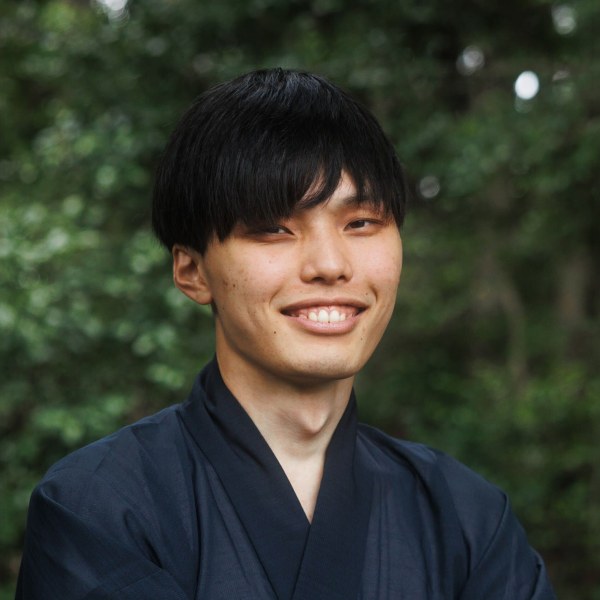
Participants are guided by Masayuki Kobayashi, Co-Founder and CEO of Rurio Inc., together with invited guest speakers from government, industry, academia, and the local community.
By the end of the programme, participants will be able to:
- Apply grassroots problem-framing to better understand local challenges through direct stakeholder engagement.
- Analyse how renewable energy, technology, business, public policy, and communities interact in regional development.
- Collaborate across cultures and disciplines in international teams.
- Develop business models, policy recommendations, or community-oriented initiatives grounded in local needs.
- Reflect critically on the role of entrepreneurship in sustainable recovery and community development.
About the instructor
Masayuki Kobayashi is the Co-Founder and CEO of Rurio Inc., a company working with town development and energy system design for rural regions in Japan. Originally from Yamagata Prefecture in Tohoku, his interest in regional revitalisation began after the 2011 earthquake and tsunami deeply affected the region he grew up in.
Masayuki holds a BEng in Mechanical and Aerospace Engineering from Tohoku University and an MSc in Sustainable Energy Engineering from KTH Royal Institute of Technology. His master’s thesis focused on the design and optimisation of a resilient distributed energy system for Odaka, Japan, connecting his technical expertise directly to the local context of this Bootcamp.
In 2021, he co-founded Rurio Inc. together with Trishit Banerjee and Swastika Harsh Jajoo. Through Rurio, he works at the intersection of energy technology, rural development, and regional revitalisation, including recent research on resilient power systems and business models designed to create economic and social benefits for the Odaka district. He has also spoken publicly about depopulation in Japanese rural areas, including in his TEDxWasedaU talk, “Towns are disappearing in Japan. What can we do?”
What is a BootCamp?
SSES Bootcamps are full-time on-site highly interactive deep-dives into an exciting challenge area, where students work alongside each other to learn, solve, bond and grow. This social immersion takes place somewhere internationally, or in beautiful Stockholm, in collaboration with our world-class academic partners. These bootcamps are designed and developed for engaged and ambitious students, giving them the tools and opportunity to address wicked problems and complex social challenges through interdisciplinary groups. Through a meticulous selection process, we handpick students from each of our six member universities in order to maximise diversity of disciplines, perspectives, cultures, and genders. Bootcamps are completely free and students and alumni of SSES and our six member universities are all welcome to apply.
The Resilient Revival Bootcamp connects to other SSES courses and workshops exploring purpose-driven entrepreneurship, nature-inspired innovation, and regenerative systems. Participants can continue these perspectives through Social Entrepreneurship, Biomimicry: Entrepreneurship via Nature, and Make it Regenerative.
Further reading on sustainable entrepreneurship
Explore our Research Recaps for accessible summaries of current research on sustainable entrepreneurship, entrepreneurial resilience, and sustainability and justice in entrepreneurship education.